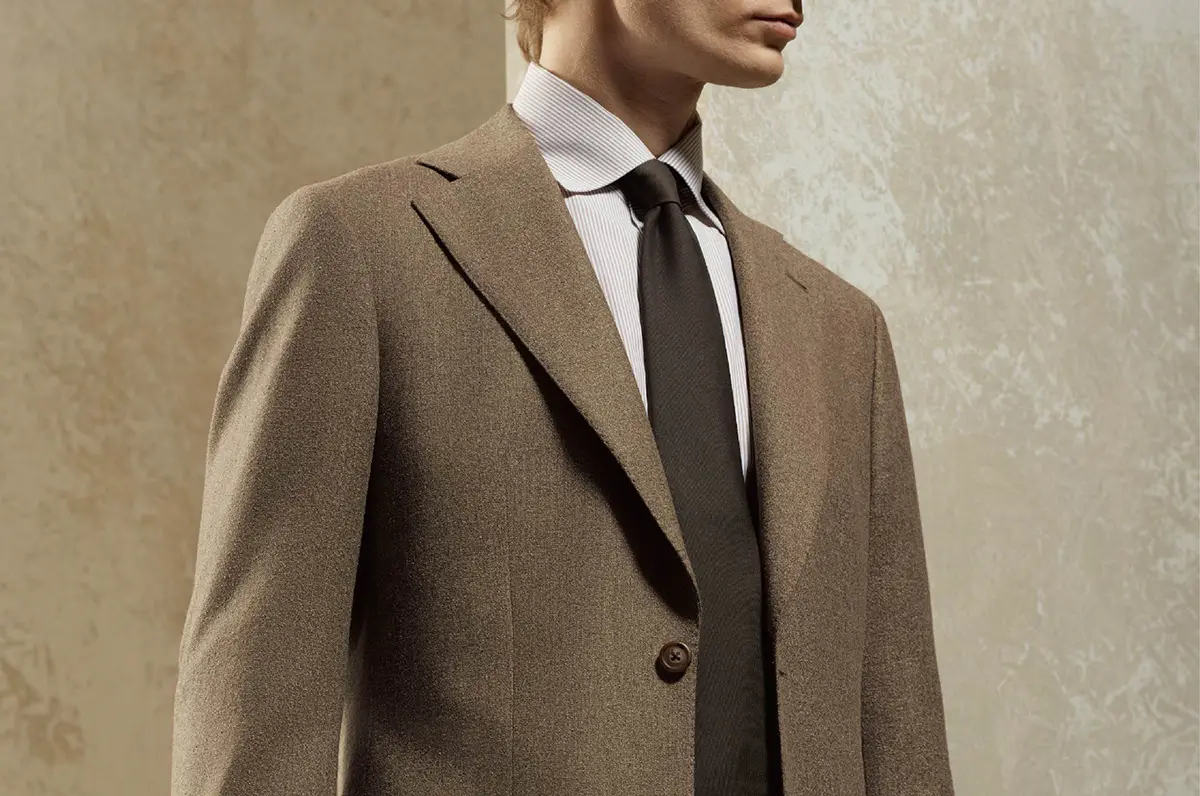
A shirt collar sits close to the face, so even a small sizing error stands out. A properly measured collar rests neatly around the neck, stays comfortable during movement, and keeps its shape from morning to evening. Tailors study several points before cutting the fabric, including neck size, collar height, collar spread, and shirt style. This detailed process gives tailor made shirts a polished appearance from the first fitting.
Starting with the neck measurement:
The tailor wraps a measuring tape around the neck at the point where the collar naturally sits. The tape stays close to the skin without pressing tightly. The tailor checks the measurement while the client stands in a relaxed position. This simple step gives the base size for the collar. A tailor also checks the space between the neck and tape. A small allowance supports comfortable movement and prevents a tight sensation. The exact allowance varies with the shirt style and personal preference.
Checking neck posture:
Neck posture affects collar placement. The tailor observes how the head sits above the shoulders and checks the neck from different angles. Some people hold their head slightly forward, while others keep a straighter posture. The tailor adjusts the collar dimensions to suit this natural stance. This approach helps the collar sit evenly instead of pulling toward the front or back.
Measuring collar height:
Collar height affects the shirt’s overall appearance. The tailor measures the desired collar band height and considers the wearer’s face, neck length, and preferred style. A lower collar gives a relaxed appearance, while a taller collar gives a sharper formal look. The tailor records these details before preparing the pattern.
Setting the collar spread:
Collar spread refers to the distance between the collar points. The tailor discusses the preferred style and checks how it works with the wearer’s face and usual clothing. A narrow spread suits a clean, understated look. A wider spread gives the shirt a bolder appearance. The tailor also considers tie use, as collar spacing should leave enough room for a neat knot.
Checking the collar points:
The collar points require accurate placement and matching lengths. The tailor measures both sides carefully so they appear balanced. Uneven points can make the shirt look untidy, especially under a jacket. The tailor also checks point length, angle, and stiffness according to the chosen design.


